
Most people fall for the house. They walk the front elevation, stand in the kitchen, picture Thanksgiving, and only afterward think about the ground it is sitting on. That order is backwards, because the house can be changed and the land cannot. If you are looking at new construction in Dickson, Charlotte, White Bluff or Burns, the home site is doing more work in that price than anything you can see from the road, and it is worth knowing how to read it.
A deeded acre and a usable acre are two different things
An acre is 43,560 square feet. That is the only part of the number that is fixed. What you actually get to use depends on how much of it holds a house, a driveway, a septic field, a setback off the road and off each property line, and whatever the county has drawn as an easement. In parts of Dickson County you will walk a two-acre parcel and find that the buildable shelf is maybe half of it, because the back drops off into a hollow and the front is a ditch line.
This is why two lots on the same road, both listed as an acre, are not the same asset. A flat, cleared acre with road frontage, a wide place for a driveway and soil that passes a septic review is worth real money. A steep acre with a creek crossing and a rock shelf under six inches of topsoil is cheaper for a reason. When someone tells you the land is the expensive part of new construction around here, this is what they mean. They are not talking about square footage. They are talking about how much of it will hold something.
So when you look at a home site, stop counting acres and start counting flat, dry, reachable ground. Stand where the house would go and turn all the way around. Where does the driveway come in. Where does the yard go. Where do the kids ride bikes. Where does the water end up after a hard rain. Everything else is bookkeeping.
Walk it slowly, and walk it after rain
The best time to see a lot is two days after a heavy rain, which is exactly when nobody wants to go look at land. Dry ground tells you very little. Wet ground tells you where the water runs, where it stands, and whether the low corner is a low corner or a seasonal pond. If you are serious about a home site, go back a second time in bad weather.
Here is the short list we walk with, and it is the same list whether the house on it is ours or somebody else’s.
- The high ground. Where is the natural place to set a house so water moves away from it rather than toward it.
- Standing water and the path it took to get there. Look for silt lines, matted grass and washed gravel.
- Rock. Exposed ledge on the surface usually means more of it underneath, which shows up in the cost of a footing, a driveway cut or a septic line.
- The tree line. Which trees are staying, which are leaning, and how close the big ones are to where the roof goes.
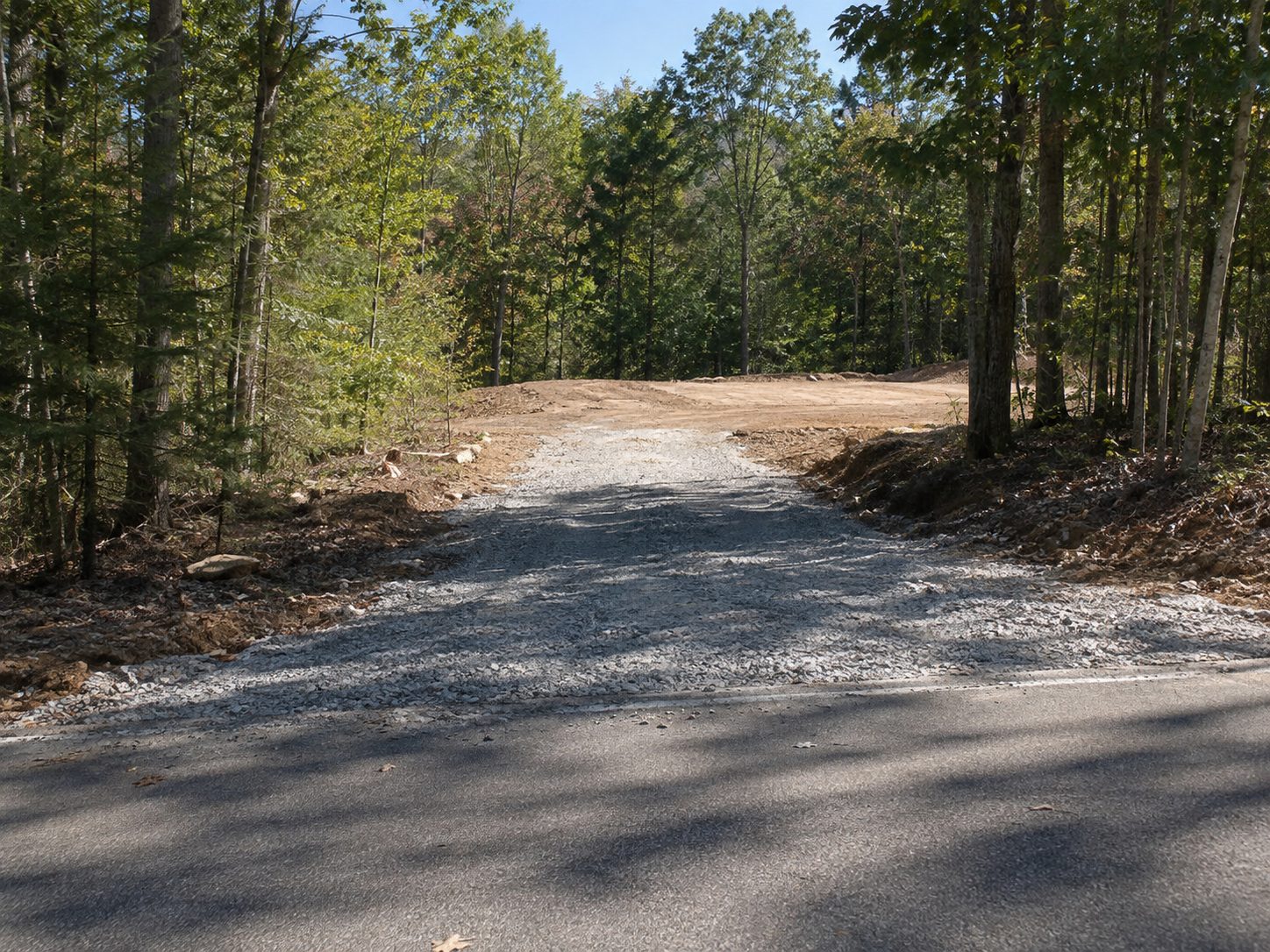
- Road frontage and sight distance. Can you pull out safely, and is there room for a culvert and a driveway apron at the right grade.
- Utilities you can see. Power poles, a water meter box, a green pedestal for internet or phone. What is at the road tells you what the run to the house will be.
- Neighbors' improvements. A new pad, a survey stake or a fresh gravel drive next door tells you what is coming.
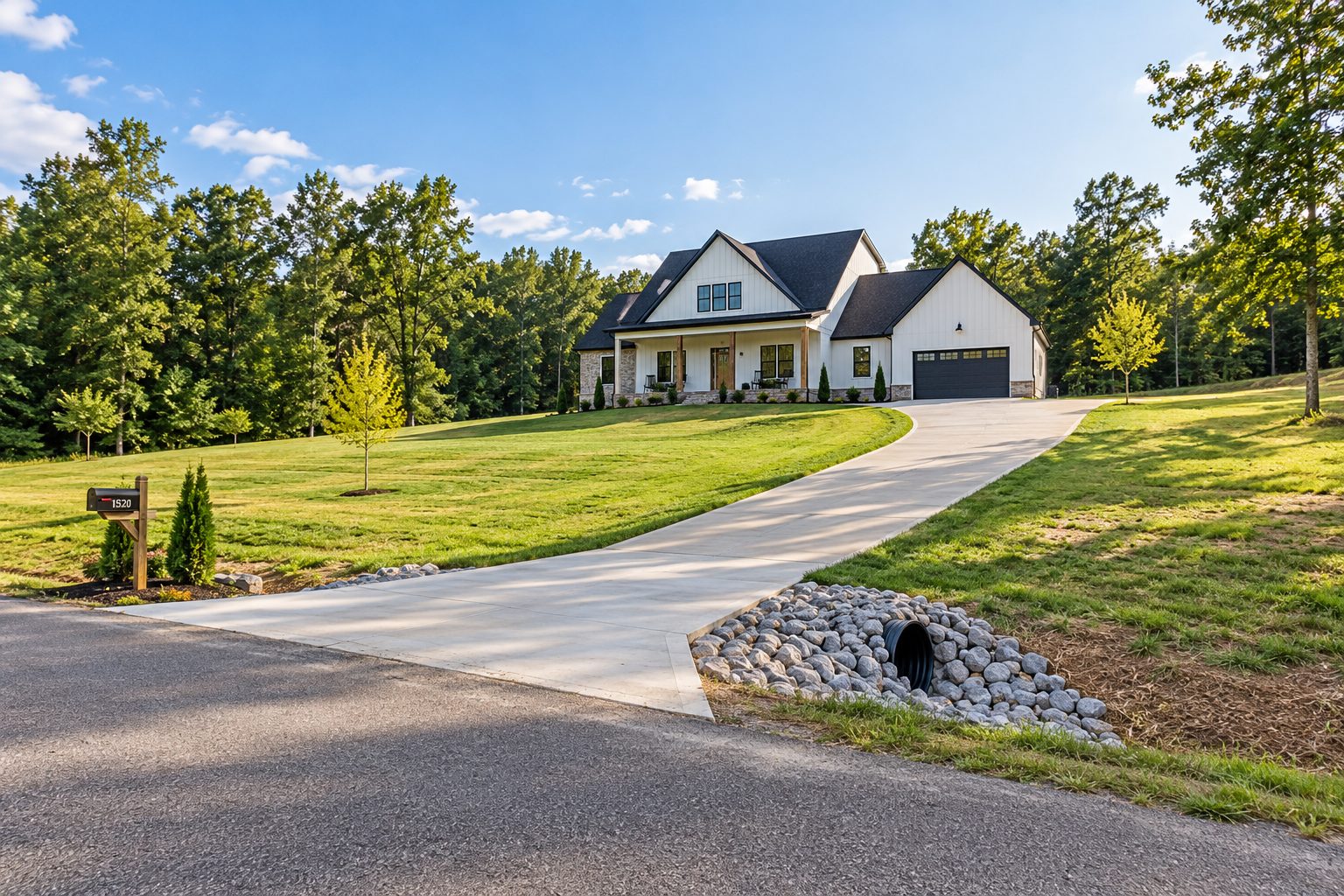
Septic or sewer is the question that decides the house
Inside the Dickson and White Bluff city limits you may have public sewer. Outside of them, on most of the county roads where land is still affordable, you are on septic. That single fact drives the footprint, the bedroom count and where the house can sit. A septic system in Tennessee is sized and permitted around the number of bedrooms, and the field has to go in soil the state will approve after a soil evaluation. If the soil will only carry a three-bedroom system, then the four-bedroom plan does not go on that lot, no matter how much you like the four-bedroom plan.
This is the most common surprise for buyers who came from a subdivision on city sewer. It is not a problem, it is just a constraint, and it is one you want to know about before you get attached. Ask whether the lot has a permit already issued, how many bedrooms it is approved for, and where the field and the reserve area are drawn. Then ask where you cannot park a truck, put a shed or plant a tree, because the field and its reserve area need to stay open.
We are builders, not soil scientists or engineers. The people to ask are the Tennessee Department of Environment and Conservation for the soil review and permit, and the Dickson County environmental and codes offices for what applies to that specific parcel. Get answers in writing, not in conversation.
Water, power and whether you can actually work from home
Public water reaches a lot of Dickson County, and a meter at the road is worth more than people realize. If there is no meter, ask what a tap costs and how far the line is, because the run from the main to the house is on the buyer either way. If the lot is on a well, ask the depth, the age, the gallons per minute and whether there is a recent water test. Those are fair questions and any honest seller will have the answers.
Electric service in this county comes from more than one provider depending on where you are, so check who serves that road and what a service run to the house would involve. If the house sits four hundred feet off the road, somebody is paying for four hundred feet of line or conduit. That is a number you can get quoted before you buy rather than discovered after.
Internet is the one that changes people’s minds. Along the state routes and in the towns you will generally find real options, and fiber has been reaching further out here every year. Two miles down a gravel road, you may be on fixed wireless or cell service. If one of you works from home three days a week, treat this as a structural feature of the property and check the actual serviceable address with the providers, not the coverage map.
Commute times: drive them yourself, at the hour you would really drive
Every number you read online about commuting from Dickson County to Nashville is either an average with no traffic in it or somebody’s guess. We are not going to print a figure we did not measure. What we will tell you is how the routes actually work, so you can go time them.
I-40 is the spine. From the Highway 46 interchange at Dickson you are heading east through the Kingston Springs and McCrory Lane exits into Bellevue, and the traffic you meet depends almost entirely on when you leave. The difference between 6:15 and 7:15 in the morning is not small, and it is not linear. If you are going south instead of downtown, State Route 840 begins at I-40 in Dickson County, and it changes the math for anyone working in Franklin, Smyrna or Murfreesboro. Coming out of Charlotte, most people take Highway 48 down to Dickson and I-40, or Highway 49 east toward Ashland City and on into Nashville from the north side. White Bluff and Burns sit between Highway 70 and Highway 96, close to the interstate but on two-lane roads, and a school bus or a tractor on Highway 96 is part of the trip some mornings.
So do this before you sign anything. Pick a Tuesday, leave the lot at the time you would actually leave, and drive to the parking garage you would actually park in. Then do it again on a Friday afternoon coming home. Two trips will tell you more than a hundred forum posts, and the second one is usually the one that decides it. A twelve-minute difference in the wrong direction is nine hours a month of your life.
What is behind you, and what could be
The tree line at the back of a lot feels permanent when you are standing in front of it. Sometimes it is, because it belongs to somebody who is not selling, or because it drops into ground nobody can build on. Sometimes it is a hundred and twenty acres that has been in a family a long time and is now three heirs and a listing. Neither one is a reason not to buy. It is a reason to know which one you are looking at.
Pull the parcel map. The Dickson County property assessor’s records will tell you who owns what is around you and how big it is. Ask the codes office what the zoning allows on the adjoining land, and whether there are easements, right-of-way plans or utility corridors recorded across the lot you are buying. A shared driveway easement is a common thing out here and perfectly workable, but you want to read it, and you want a real estate attorney to read it, not a builder and not a blog.
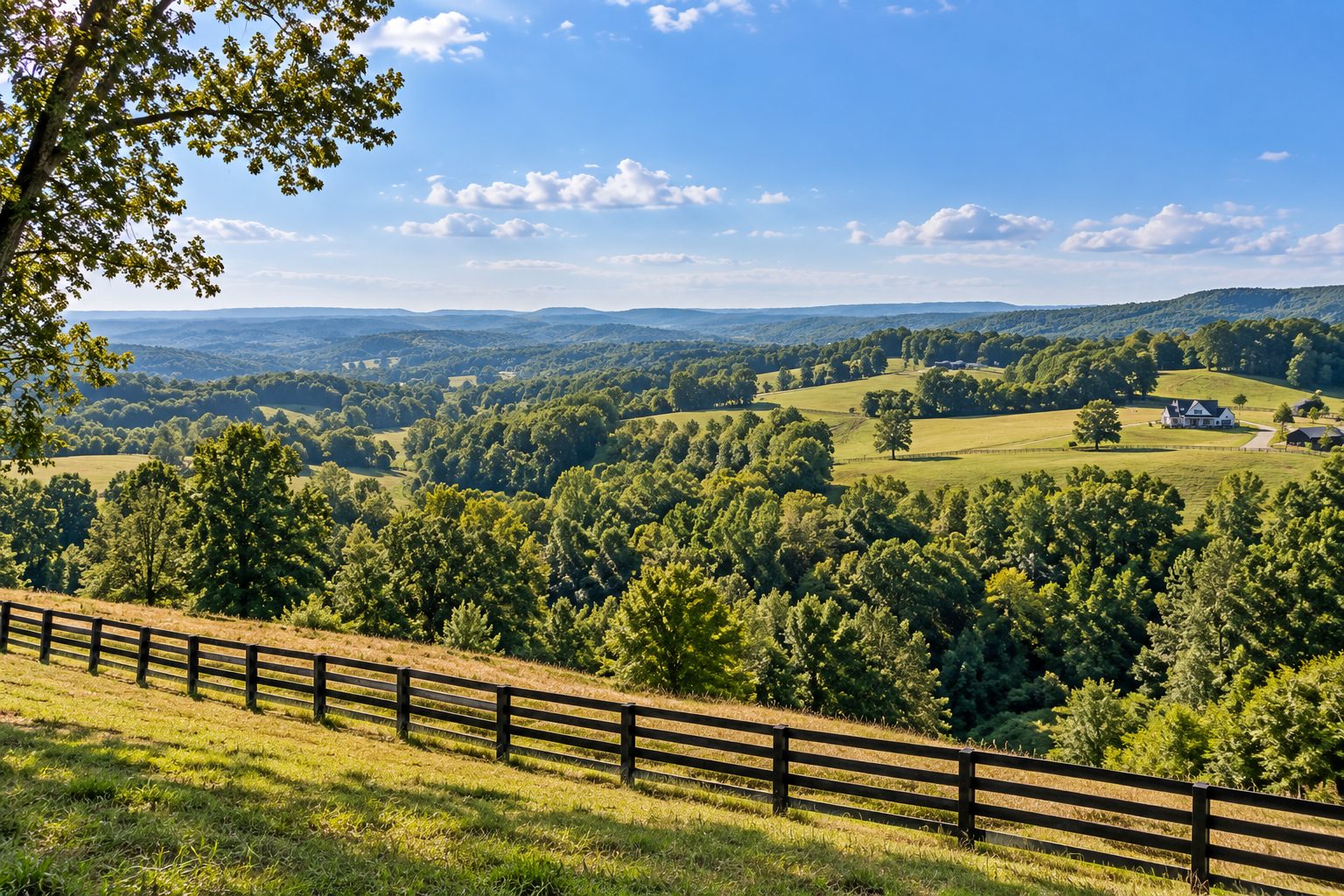
Middle Tennessee is growing west along the I-40 corridor and it has been for years. That is generally good for people who already own here and it means change. Buy a lot you would still like if the field behind it were forty houses, or buy one where that cannot happen, and be clear with yourself about which one you chose.
Price the land after closing, not just at closing
If you are considering buying a lot on your own and building later, the purchase price is the beginning of the number. Between the deed and the driveway sit a survey, a soil evaluation and septic permit, a well or a water tap, a power run, clearing and grubbing, a driveway with a culvert at the road, a building pad, and often rock work nobody planned on. We are not going to invent dollar figures for those, because they swing hard with the site and with the week you ask. Get three quotes for each one on the specific parcel and add them up honestly.
That exercise is worth doing even if you never buy raw land, because it explains what you are actually comparing when you look at a finished new house on an acre. The land, the site work and the utilities are already inside that price, along with the risk that the rock was worse than expected. That is the trade. You give up choosing every last thing and you get a known number and a house that is done.
This is also why a spec home and a lot purchase are not really the same decision. One is a product with a price. The other is a project with a range. Both are fine. Knowing which one you have the appetite for will save you a year of second-guessing.
How we pick a home site, and what to do next
Southaven builds its own floor plans on its own home sites in Dickson, Charlotte, White Bluff and Burns. When we buy a lot, we are doing the same walk described above, because we have to live with the answer long before a buyer does. We look for a place the house can sit high and dry, ground that will carry the septic system the plan needs, a driveway that comes in at a grade a moving truck can use, and a road you can pull out of after dark. If a parcel does not do those things, the price does not fix it. We pass. That is most of what lot selection is.
Then the plan follows the land, not the other way around. A plan like the Adrian goes where it fits and sits where it should, and you can look at the layout at https://southavenhomes.com/plan.html?plan=adrian. Homes are sold as built, so what you are choosing from is what is actually going up. The homes for sale right now, with their bedroom and bath counts, square footage, acreage and price, are at https://southavenhomes.com/homes.html, and the rest of this column is at https://southavenhomes.com/blog.html.
If you own land in Dickson County and have wondered what it is worth to a builder, that conversation is at https://southavenhomes.com/sell-your-land.html. And if you are looking at one of our home sites and want to walk it with somebody who knows where the water goes on it, come and see it. We show by appointment — call or text (615) 574-3954, or reach us at https://southavenhomes.com/index.html#contact. Bring the questions that are still open, including the ones about the ground.